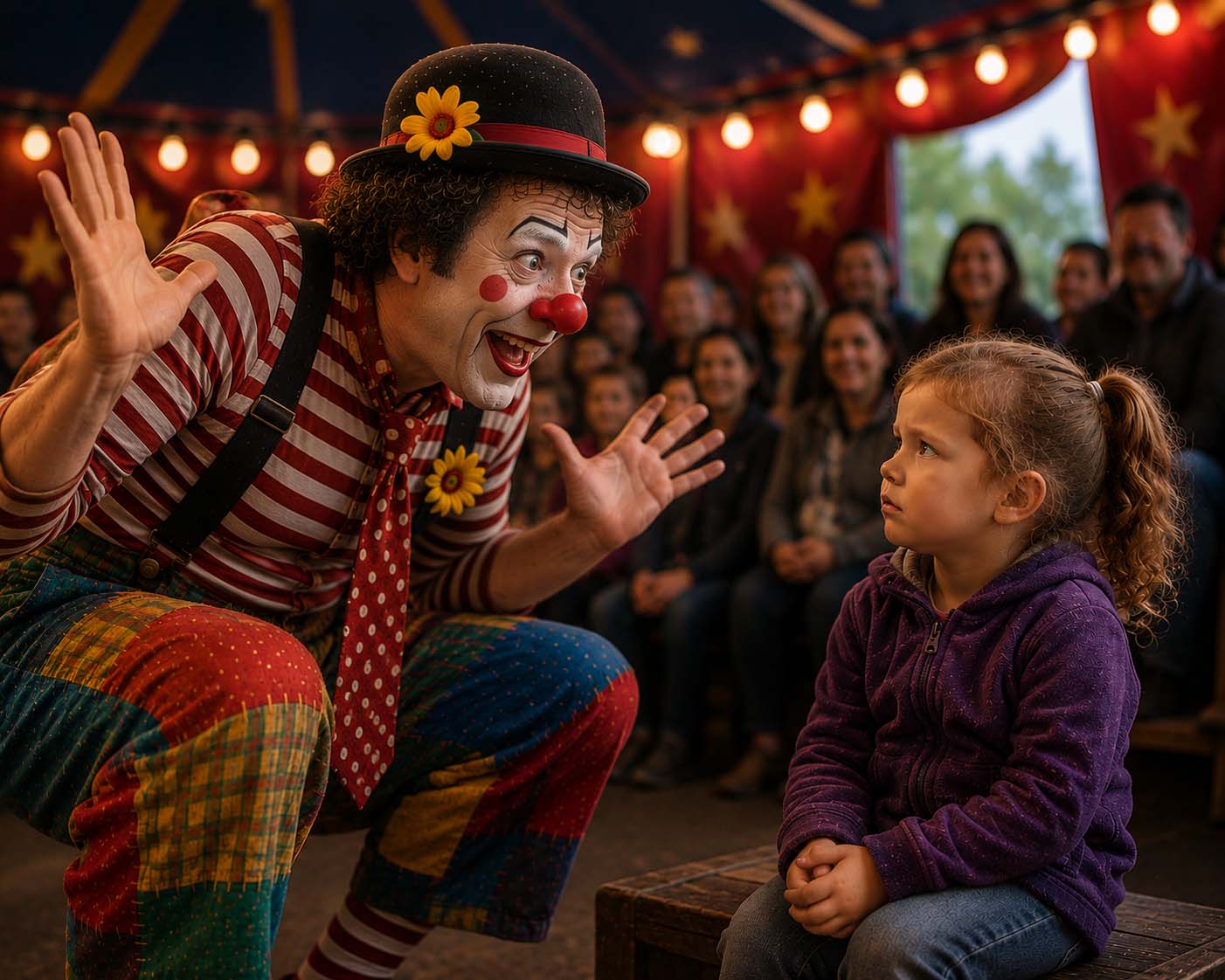
One of the hardest lessons for performers to accept is this:
Audiences are far smarter than we give them credit for.
Children especially.
Kids may not understand performance theory, timing, stagecraft, or character development — but they understand sincerity almost instantly. They know when a clown is nervous. They know when a performer is uncomfortable. They know when someone is trying too hard to be funny.
And they definitely know when a clown cares more about attention than interaction.
A lot of new performers think clowning is about getting laughs as quickly as possible. So they rush. They become loud. Every movement gets bigger. Every gag becomes exaggerated. Every interaction turns into an attempt to “win” the audience.
Ironically, that usually creates distance instead of connection.
The strongest clowns are often the ones least afraid of slowing down.
They listen.
They react.
They let moments breathe.
Good clowning is not machine-gun comedy.
It’s relationship building in real time.
That’s why some of the best clown moments happen completely by accident. A dropped prop. A confused glance. A tiny interaction with someone in the crowd. A simple reaction that wasn’t rehearsed at all.
Those moments feel real because they are real.
Audiences are constantly searching for authenticity, even if they don’t consciously realize it. In a world filled with filters, algorithms, staged reactions, and manufactured personalities, people are starving for genuine human interaction.
That includes entertainment.
Especially entertainment.
The mistake some performers make is treating clowning like armor. The costume becomes protection. The makeup becomes a mask to hide behind. The character becomes a shield against vulnerability.
But the clowns people remember are usually the opposite.
They let the audience see failure.
Confusion.
Excitement.
Hope.
Embarrassment.
Joy.
The clown becomes relatable instead of untouchable.
That’s where the magic lives.
Not in perfection.
Perfection is forgettable.
A flawless performance may impress people, but honest moments stay with them.
I’ve watched audiences forgive mistakes instantly when they trusted the performer. I’ve also watched technically skilled performers lose a crowd because everything felt forced and calculated.
You can rehearse technique.
You cannot rehearse authenticity.
That doesn’t mean preparation isn’t important. It absolutely is. Good clowning takes practice, discipline, timing, awareness, and professionalism. But technique should support connection — not replace it.
Some performers spend years perfecting props before learning how to simply stand comfortably in front of another human being.
That’s backwards.
The audience is not asking whether your routine is technically advanced enough. Most people are asking something much simpler without ever saying it out loud:
“Can I trust you enough to laugh with you?”
And once that trust exists, almost everything changes.
The room softens.
People lean in.
Children engage.
Adults let their guard down.
That’s the point where clowning stops being “performance” and starts becoming experience.
And audiences always know the difference.
Smokie

Bringing joy and laughter since 1946
The audience knows when your faking it!