One of the first things a performer learns is how to approach people.
One of the last things a good clown learns is when not to.
That lesson matters more than most people realize.
A lot of inexperienced performers assume success means getting reactions from everyone. Every child should laugh. Every adult should engage. Every interaction should become a moment.
But real audiences don’t work that way.
Some people love clowns immediately.
Some people need distance.
Some people are overwhelmed.
Some people are grieving.
Some people are anxious in crowds.
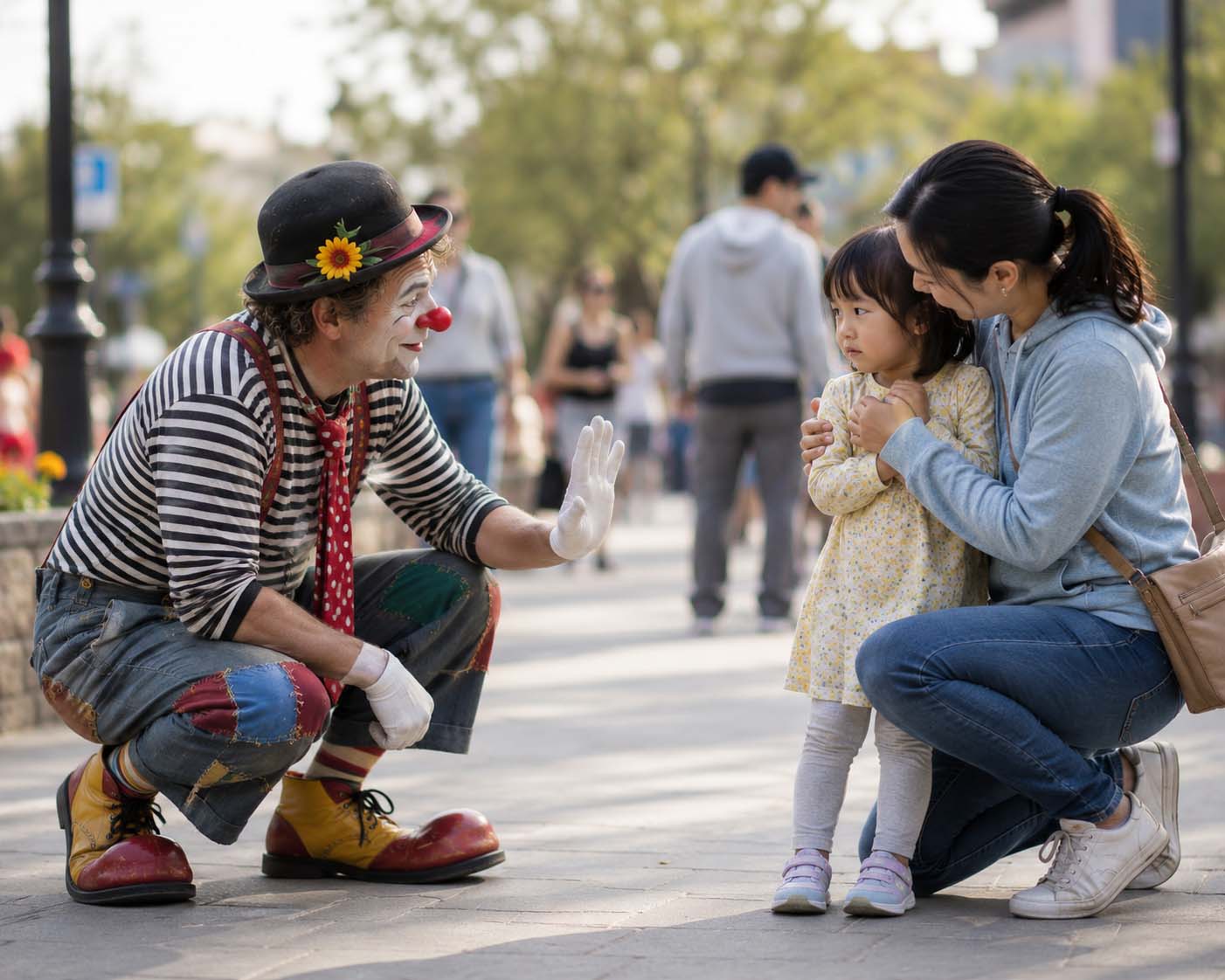
Some children are curious but cautious.
Some adults carry memories or fears you know nothing about.
A good clown learns to respect that.
The audience is not a collection of targets.
They’re human beings.
And human beings deserve emotional awareness.
One of the biggest mistakes performers make is confusing persistence with professionalism. They push harder when someone pulls away. They increase volume when subtlety would work better. They try to “win over” people who are clearly uncomfortable.
That usually has the opposite effect.
Good clowns invite.
Bad clowns impose.
That distinction changes everything.
The strongest performers understand that consent exists in entertainment too. Not formal consent in the legal sense emotional consent. The audience tells you constantly, through body language, eye contact, posture, movement, and energy, whether they want interaction.
And children are especially honest about it.
Some kids want to sprint directly into the moment.
Others need to observe safely from a distance first.
Both reactions are okay.
A thoughtful clown understands that creating safety is more important than forcing participation.
Ironically, when audiences feel emotionally safe, they usually become far more willing to engage naturally.
That’s why awareness matters so deeply in clowning. The performance is not just about jokes or tricks. It’s about reading human behavior respectfully in real time.
The best clowns are not emotional bulldozers.
They’re emotional listeners.
And listening changes how you move through a crowd.
Sometimes the greatest thing a clown can do is simply wave gently and keep walking.
Sometimes it’s kneeling down quietly to a child’s level.
Sometimes it’s backing away gracefully.
Sometimes it’s allowing people to come to you instead of chasing reactions.
That patience creates trust.
And trust creates better moments than forced comedy ever will.
I think this is one of the reasons truly great clowns are often remembered so fondly years later. People may not remember every gag or costume detail, but they remember how the performer made them feel emotionally.
Safe.
Seen.
Included.
Respected.
That kind of interaction stays with people.
The truth is, not everyone needs a clown at every moment.
But the people who do?
They deserve one who understands the difference.
Smokie
Bringing joy and laughter since 1946
A good clown understands that not everyone needs a clown